The modelling is the part you’re not worried about.
Send us the project. We model the real interface — windows, walls and the junctions between them — for condensation and Mould Index to ISO 15099, and hand you an audit-ready result for the file. The specialist your spec can lean on, so the number survives shop-drawing stage.
The people who sign the design off wear the risk.
When condensation or mould turns up, the question is always the same: was it foreseeable? Modelling the interfaces puts the performance on the record at design stage — modelled and it passed, you have evidence; never looked at, that’s a harder conversation. We give you the record; your certifier signs it off.
Checked, not assumed
Specify glazing and junctions you can show were modelled — backed by the actual installed window, not a catalogue sample that gets swapped at tender.
Holds at shop-drawing stage
The number is tied to the real system and size, so it stands up when the design moves from spec to the window that’s actually fabricated.
The physics you’d rather not own
Hand us the fenestration and interface building physics — condensation, Mould Index, thermal bridging at the junction — and keep your focus on the whole-of-building model.
Audit-ready evidence
A decision-ready page your certifier can sign against — the Mould Index vs the limit, per junction, per climate zone, with the forensic inputs behind it.
This is what you actually get.
A real modelled interface — the same junction as designed, then revised — and the decision-ready gate your certifier signs against. No black box: the number, the limit, and the forensic inputs behind it.
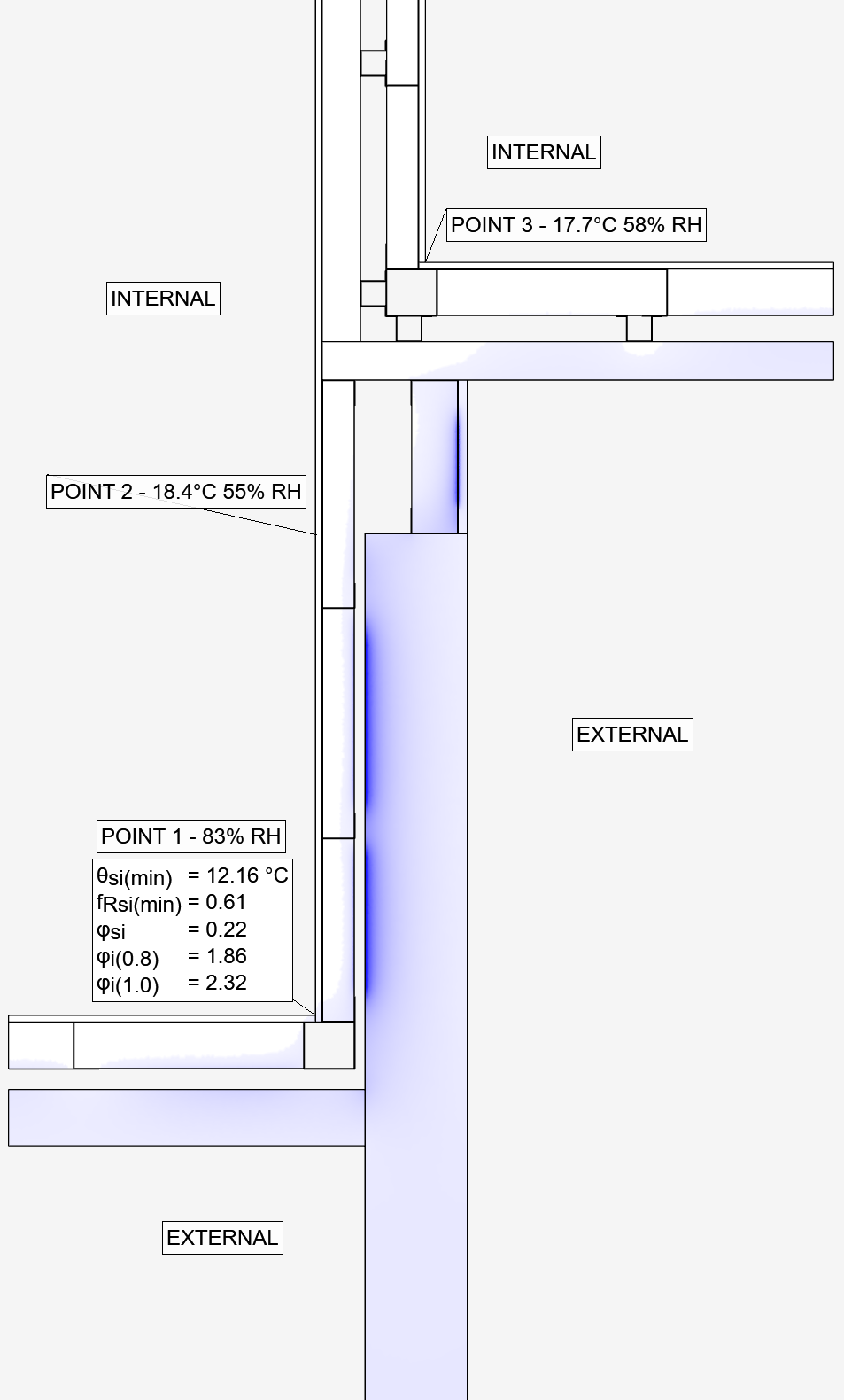
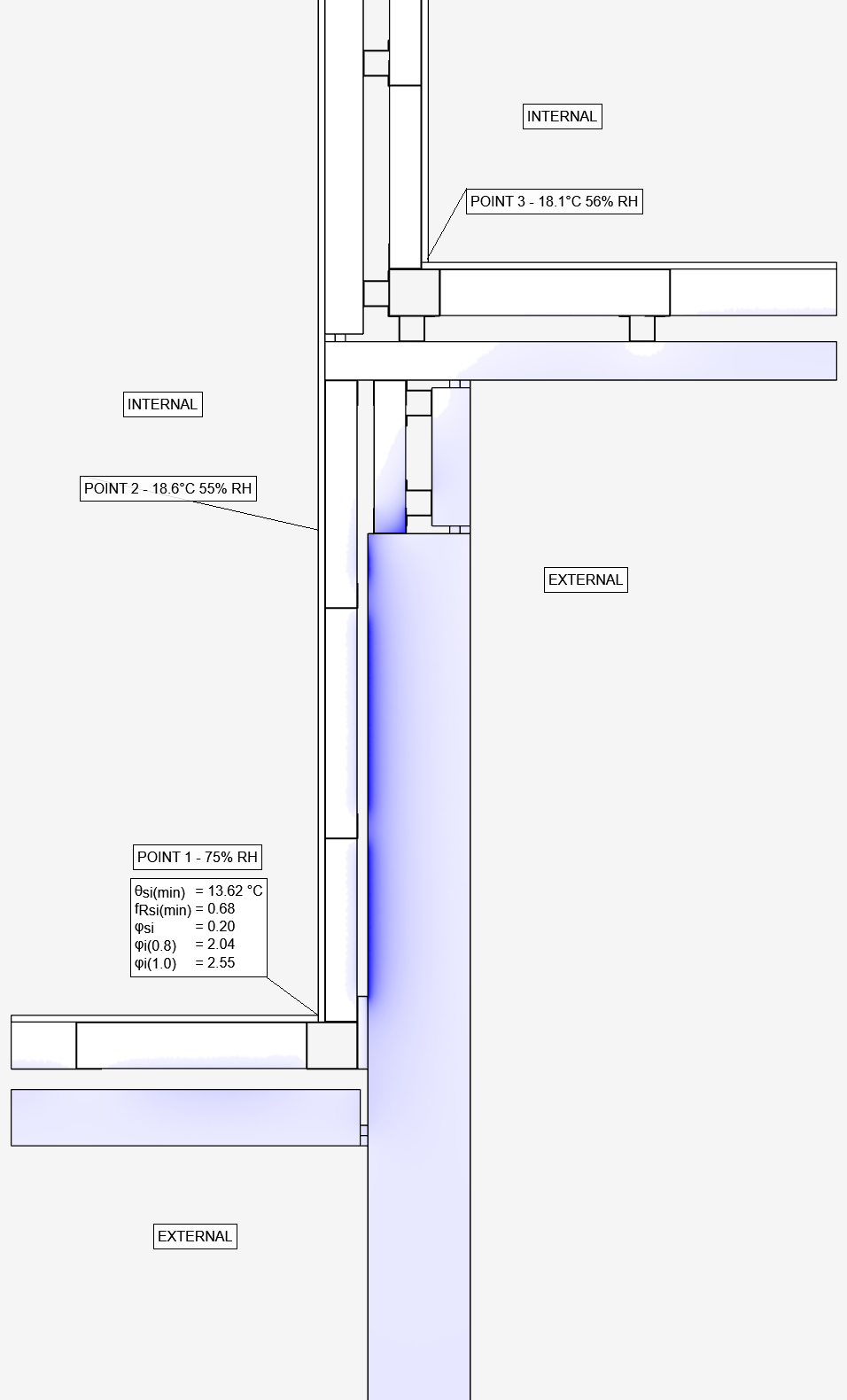
| NCC compliance gate | Result | NCC limit | Status |
|---|---|---|---|
Mould Index AIRAH DA07 (ISO 13788 / VTT) · sole NCC determinant | 2.59 / 6 | ≤ 3.0 | Within limit |
| Forensic metric | Outcome X | CZ target | Band |
|---|---|---|---|
| Min surface temp (Ti) | 13.62 °C | ≥ 12.6 | Acceptable |
| Temperature factor (fRsi) | 0.68 | ≥ 0.43 | Robust |
| Surface humidity (RHsi) | 75% RH | ≤ 80% | Marginal |
Sample output, client details redacted. Every MI-6 assessment returns this gate — per junction, per climate zone. Final NCC compliance is determined by your assessor / certifier.
That’s one junction. Here are eight, across every zone.
The interactive TIRS™ case study takes eight real sill systems on the same glass and shows which keep the mould out — and which don’t — across climate zones 2, 5 and 6. Pick a zone on the map, compare any two systems side by side, and read the Mould Index against the NCC limit. It’s the clearest demonstration of why the frame and the interface decide the result — not the U‑value.
Which window keeps the mould out?
Eight fixed-sill systems, one glass, three climate zones — modelled for Mould Index, minimum surface temperature and holistic comfort. Pick a zone, compare any two, and read it off yourself.
The method under your evidence is checkable.
Our CFL solver is cross-validated head-to-head against LBNL THERM — the internationally recognised reference the ratings are built on. Not “trust us”: a documented, independent comparison, kept current as the library grows.
A rating gives you a number. We give you a number and the validated method behind it — the part that matters when the evidence is questioned.
CFL vs THERM verification: 222 results, 98.7% average accuracy, kept current as the library grows. Full comparison available on request.
How it works
From the drawings to a result your certifier can sign against — without you owning the fenestration physics.
Send the project
The drawings or sections and the junctions in question — windows, walls and where they meet. A single detail or the whole envelope.
Drawings inWe model the real interface
The actual window and the junction it sits in, modelled to ISO 15099 — not a generic sample, the assembly on your project.
ISO 15099Forensic condensation & Mould Index
An Outcome X fRsi surface-temperature scan and the Mould Index (AIRAH DA07 / ISO 13788) — the sole NCC determinant under F8V1 / H4V5 — per climate zone.
TIRS™ MI-6Audit-ready result
The evidence page for the file: the number, the limit and the inputs behind it. Final NCC compliance is determined by the appointed certifier — we give them what they sign against.
For the fileThe lab the consultants consult.
H/F condensation compliance on glazed façades is genuinely misunderstood — by the consultants as much as anyone. That’s why ESD and façade engineers lean on our modelling, not just window manufacturers. A WERS number was built to compare products on a common basis; it was never built to certify the specific window on your project. We model the real thing — the installed window and its junction — to the same ISO 15099 method, and put it on the record before it’s built. If it ends up in dispute, the modelling should be the part you’re not worried about.
“I have no hesitation in recommending his work. A dedicated professional — his output is timely, concise and accurate. I’ll no doubt be seeking his assistance for future projects.”
Put it on the record.
Send us the project — or one junction you’re unsure about — and we’ll model the real interface and hand you the evidence for the file.
Request an assessmentBuilding, not specifying? →Independent third party. AFRC Lab provides verification data, method and training — we don’t supply, sell or endorse products. Project-specific thermal simulation to ISO 15099; modelled results reflect the systems and sizes provided, and final NCC compliance is determined by your assessor / certifier. TIRS™ is a trademark of AFRC Lab Pty Ltd (patent pending).